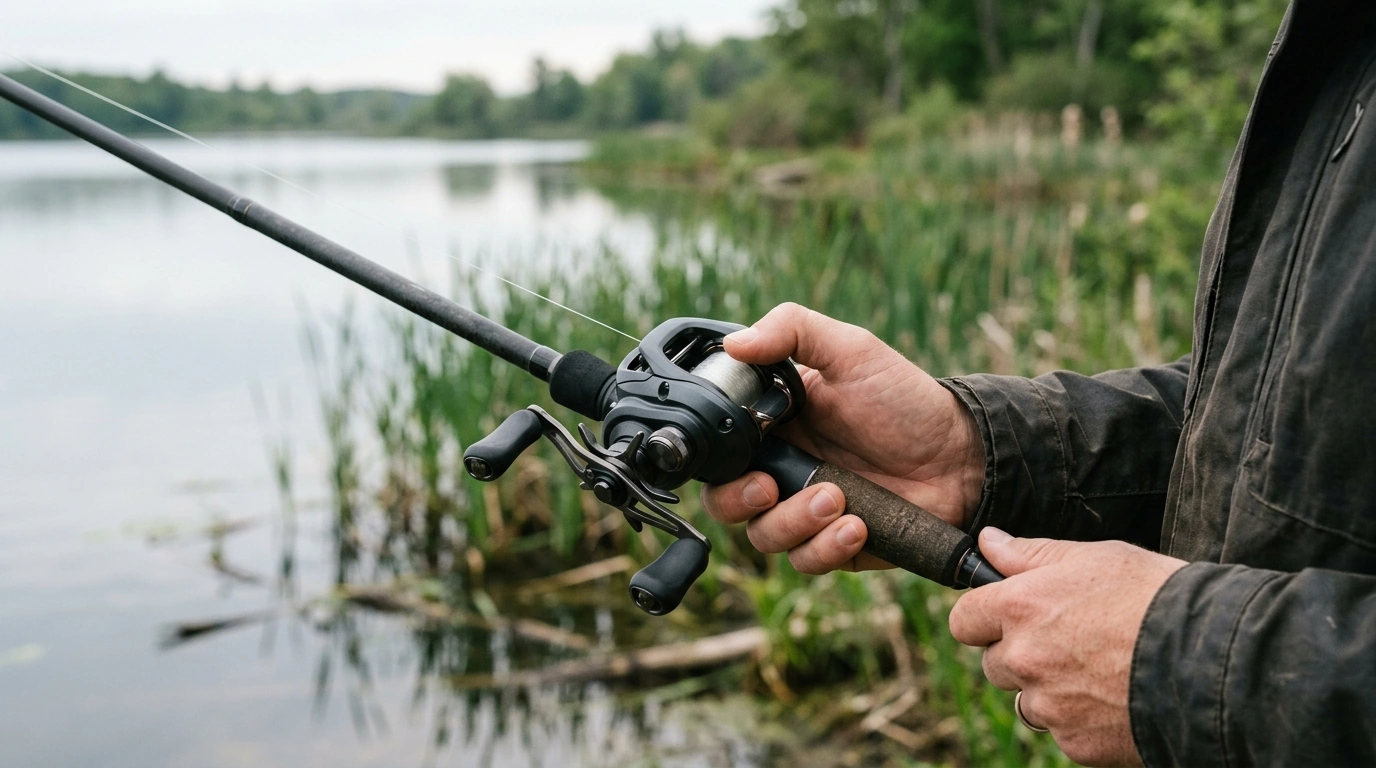
When a bite turns into a sprint, a baitcasting reel should feel predictable: the handle stays smooth, the spool starts and stops cleanly, and the retrieve keeps pace without effort. This 7.2:1 baitcasting reel pairs a fast gear ratio with a metal spool for anglers who want quick line pick-up and steady performance across common bass and inshore-style presentations.
Smoothness is more than a comfort feature—it’s control you can feel in the middle of a retrieve, during a cast, and while fighting a fish.
A 7.2:1 reel shines when you need to recover line quickly. That can mean staying connected on a fish that charges toward you, or simply keeping your presentation tight and efficient between targets.
| Technique style | Why it fits a fast baitcaster | Helpful approach |
|---|---|---|
| Jigs & worms (bottom contact) | Quickly gathers slack after hops and pauses | Lift, reel down, stay ready for pressure changes |
| Spinnerbaits & swim jigs | Maintains pace and reacts fast to short strikes | Vary cadence; speed up near cover |
| Texas rigs around cover | Fast recovery for immediate control after the bite | Engage quickly and steer fish away from structure |
| Topwater walkers/poppers | Instant slack pick-up keeps action crisp | Twitch-twitch-pause with quick line management |
| Buzzbaits & steady retrieves | Keeps the bait up and moving; easy to burn it | Start fast to plane; adjust speed to conditions |
A metal spool is a practical choice when you want repeatable behavior across lots of casts and a retrieve that feels composed when you lean into it.
Most “baitcaster headaches” come from starting too loose and casting too hard. A simple, repeatable setup routine fixes most of it.
If you want a quick refresher on the mechanics and hand positioning, you can also reference Take Me Fishing’s baitcasting reel guide and the practical how-to library at Bassmaster.
| Where you’re fishing | Common goal | Practical line direction (general) |
|---|---|---|
| Grass and vegetation | Winch fish out fast; cut through weeds | Braid main line; leader optional |
| Wood, docks, laydowns | Control fish immediately after hookset | Fluoro or braid depending on cover density |
| Open water or clear lakes | Long casts; subtle presentations | Fluoro main line or braid-to-fluoro leader |
| Topwater zones | Keep bait on surface; reduce pull-down | Mono or braid depending on lure and cover |
No—your hand controls the true retrieve speed, so a 7.2:1 reel can still fish slow when you crank deliberately. The advantage is that you can instantly recover slack and keep up with techniques that demand quick line management.
A metal spool promotes stable, consistent behavior across repeated casts and firm retrieves. It can feel more dependable when you switch lure weights and helps support even line lay when you spool with steady tension.
Start with conservative brake settings, use smooth casting acceleration, and rely on your thumb at the end of the cast to feather and stop the spool at splashdown. Make small adjustments one at a time rather than changing multiple settings at once.







Leave a comment