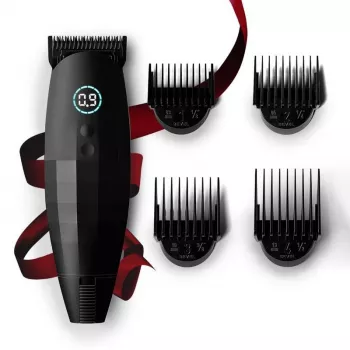
A good cut is less about complicated technique and more about control: steady power, predictable trimming, and the right approach for hair vs. beard. Our Professional Hair Clippers & Beard Trimmer is built for that practical, barbershop-clean finish at home—quick bulk removal, tidy detailing, and the ability to keep your look consistent between appointments. For more guidance, see Hair Trimmers Products.
What “professional” really means for at-home grooming
When people say “professional,” they usually mean one thing: the trim looks intentional. At home, that comes from consistency and a simple workflow you can repeat. For further reading, see Professional Hair Clippers for Men Beard Trimmers Kit ….
- Consistent cutting for faster results: the goal is fewer passes over the same spot, which helps reduce tugging and patchiness.
- Two jobs, one workflow: clippers handle bulk and blending; the trimmer handles edges, necklines, and tight areas where precision matters.
- Better control = easier symmetry: clean sideburns, even beard lines, and balanced fade steps come from steady trimming and clear sectioning—not from rushing.
- A practical upgrade for anyone who trims weekly: if your beard gets shaped often or you maintain hair between barbershop visits, a capable clipper + trimmer set pays back in time and consistency.
Dial in the basics before the first pass
A cleaner outcome usually comes from the setup, not the last-minute “fixing.” Give yourself a routine you can repeat.
- Start dry and detangled: dry hair and beard show true length and density; comb through to remove knots so the cut stays even.
- Pick one baseline length: choose a conservative guard length first, then step down gradually. It’s easier to take more off than to fix an uneven spot.
- Use light pressure and steady speed: let the tool do the work; pressing harder increases the odds of lines and irritation.
- Work in good lighting and mirror angles: check both sides often—front view for symmetry, side view for taper and neckline alignment.
Quick guide: match the tool to the task
| Goal |
Use clippers for |
Use trimmer for |
Technique cue |
| Uniform haircut |
Bulk length reduction across the head |
Clean around ears and neckline |
Go with the grain first, then refine |
| Fade or taper |
Blending larger sections with guard steps |
Detailing the lower edge and corners |
Small motions; change guards in small increments |
| Beard shape-up |
Reducing overall beard length evenly |
Cheek line, mustache edge, neckline |
Outline first, then trim down to match |
| Neckline cleanup |
Removing longer growth below the beard line |
Crisp neckline edge |
Keep the line slightly above the Adam’s apple for a cleaner look |
Haircuts that look intentional (even if the routine is simple)
You don’t need a complex fade to look put-together. A uniform length plus clean edges reads “fresh” immediately.
- For an even all-over cut: choose a guard, move in consistent paths, and overlap each pass slightly to avoid missed patches.
- For a basic taper: keep longer length on top, then step down guard lengths as you move toward the sides and neckline. Blend transitions with short, controlled strokes.
- Around the ears: use the trimmer for tight curves and finish work—this is where a haircut starts to look clean, even without a complex fade.
- Neck cleanup makes the biggest difference: a tidy neckline instantly sharpens the whole cut. Make the edge, then lightly remove strays below it.
One habit that helps: pause every minute, drop your shoulders, and re-check symmetry. Most home haircuts go sideways from speeding up near the end.
Beard trimming that stays sharp for days
A beard looks best when the length and the lines agree. If the outline is crisp but the bulk is uneven (or vice versa), the whole shape feels off.
- Outline first, then trim: define cheek and neckline edges with the trimmer before taking bulk off with clippers; this keeps the final shape balanced.
- Keep the neckline natural (not too high): an overly high line can make the beard look smaller and less proportional. Aim for a clean boundary that still looks believable.
- Tidy the mustache with restraint: clean the edges and reduce bulk gradually; a mustache usually looks best when it still has density.
- Check from multiple angles: what looks even straight-on can look uneven from the side—especially at the jaw corners.
Comfort and skin-safe trimming habits
Sharper lines shouldn’t come with irritation. Your skin usually reacts to pressure, repetition, and leftover debris more than the tool itself.
If you’re prone to bumps, the American Academy of Dermatology has straightforward prevention tips you can follow consistently: https://www.aad.org/public/everyday-care/skin-care-basics/hair/razor-bumps.
Care routine that keeps performance steady
When this set is the right fit
In-stock picks from our team
FAQ
Can a hair clipper and beard trimmer be used for both head hair and facial hair?
Yes—use clippers for bulk and larger areas, and use the trimmer for edges and tight detail. For hygiene and comfort, clean thoroughly between uses, especially if you switch from scalp to beard.
How can irritation and bumps be reduced when lining up the neckline?
Use light pressure, avoid repeated passes over the same skin, and start by trimming with the grain. Keep tools clean, then rinse away clipped hairs and apply a gentle moisturizer or balm afterward.
How often should clippers and trimmers be cleaned and oiled?
Brush out hair after each session, disinfect as needed (especially if the tool is shared), and oil when cutting feels less smooth or sounds louder than usual. Wipe away any excess oil so it doesn’t attract buildup.
Recommended for you






Leave a comment