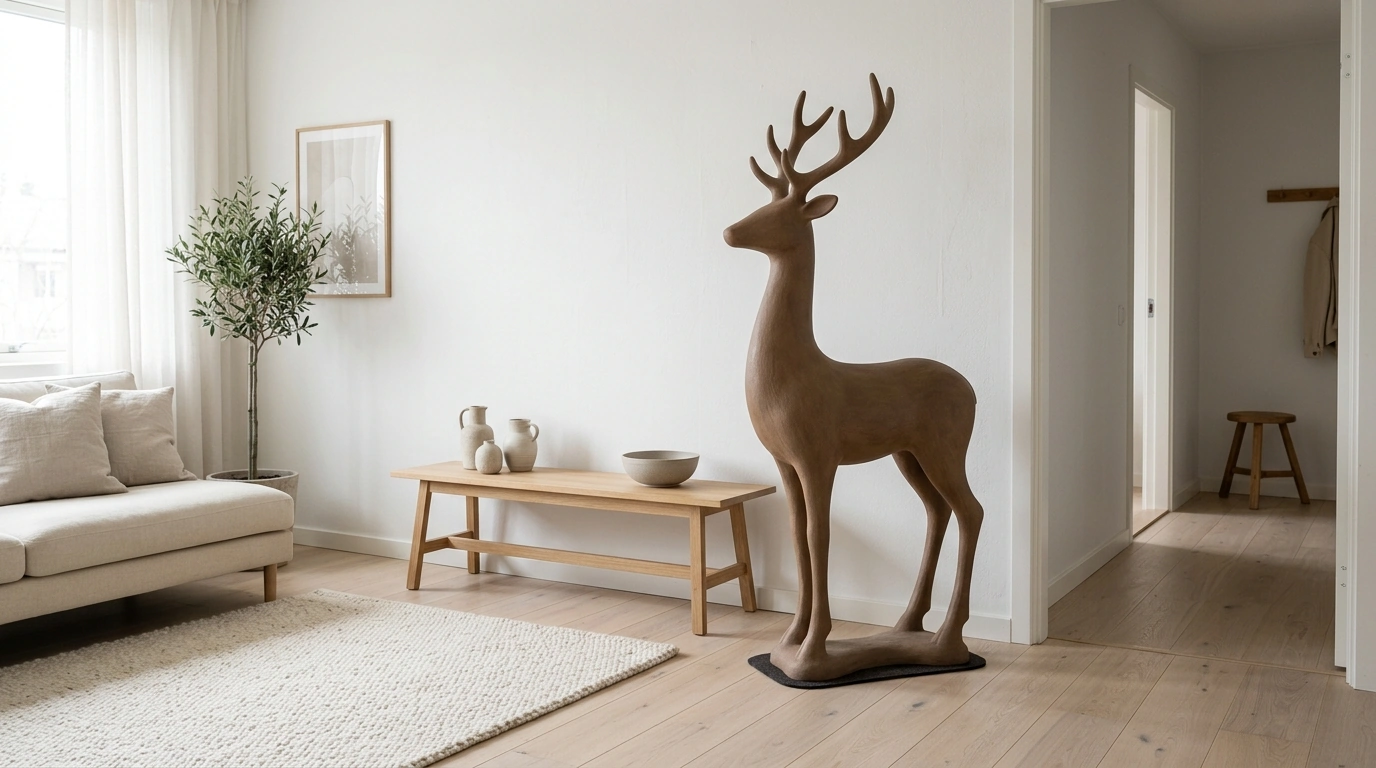
A floor sculpture is more than décor—it sets the mood of a whole space. Our Large Nordic Deer Floor Sculpture brings a quiet, nature-inspired presence to interiors that lean modern, Scandinavian, rustic, or softly minimal. Use it as an anchor near an entryway, fireplace, reading corner, or open-plan living area where the room needs height, texture, and a focal point that feels collected rather than crowded.
Unlike small tabletop accents that disappear once life happens (mail piles, remotes, mugs), a tall floor sculpture holds its own. It reads like “visual furniture”—a deliberate form that defines a zone without adding bulk.
| Room/Spot | What it adds | Styling notes |
|---|---|---|
| Entryway or foyer | A welcoming focal point and vertical interest | Pair with a slim console and a tray for keys; keep the floor area uncluttered so the silhouette reads cleanly. |
| Living room corner | Scale and balance next to sofas/sectionals | Add one floor lamp or a plant nearby; avoid stacking multiple tall accents competing for attention. |
| Fireplace zone | Symmetry or an intentional offset | Use as one side anchor, then mirror the weight with a basket, log holder, or low stool on the other side. |
| Dining room or open-plan edge | A soft divider between zones | Place at the boundary between dining and living areas; repeat the tone with a simple centerpiece or linen runner. |
| Stair landing or wide hallway | Museum-like presence without wall clutter | Keep surrounding walls quiet; one framed print or sconce is enough to support the look. |
Floor sculptures look most expensive when they’re given room to exist as a form. Our team uses a few simple placement rules to keep the effect calm and intentional.
If you like a cohesive home that still feels lived-in, think of the sculpture as your steady anchor—and let small, easy-to-change pieces do the seasonal work.
A statement piece should stay beautiful with everyday life happening around it. The basics are simple: stability, protection, and gentle cleaning.
For broader context on how sculpture functions as an art form, the Metropolitan Museum of Art’s sculpture overview is a helpful reference. And for general object-care habits that translate well to home décor, the Smithsonian’s collections care basics are a solid guide.
Give it negative space so the silhouette reads clearly, and keep nearby décor low and streamlined. Limit other tall items to one supporting piece (like a floor lamp), and position it where you’ll naturally see it from a main walkway or seating area.
Use felt pads or protective footers under contact points and check them occasionally for wear or trapped grit. If the area allows, a thin rug can add another buffer, and it’s always better to lift and place rather than drag when repositioning.
Place it at a zone boundary (like the edge between dining and living), in a corner that needs height, or where it’s visible from the entry sightline. It works best as a visual anchor that defines the space without adding the bulk of another furniture piece.





Leave a comment