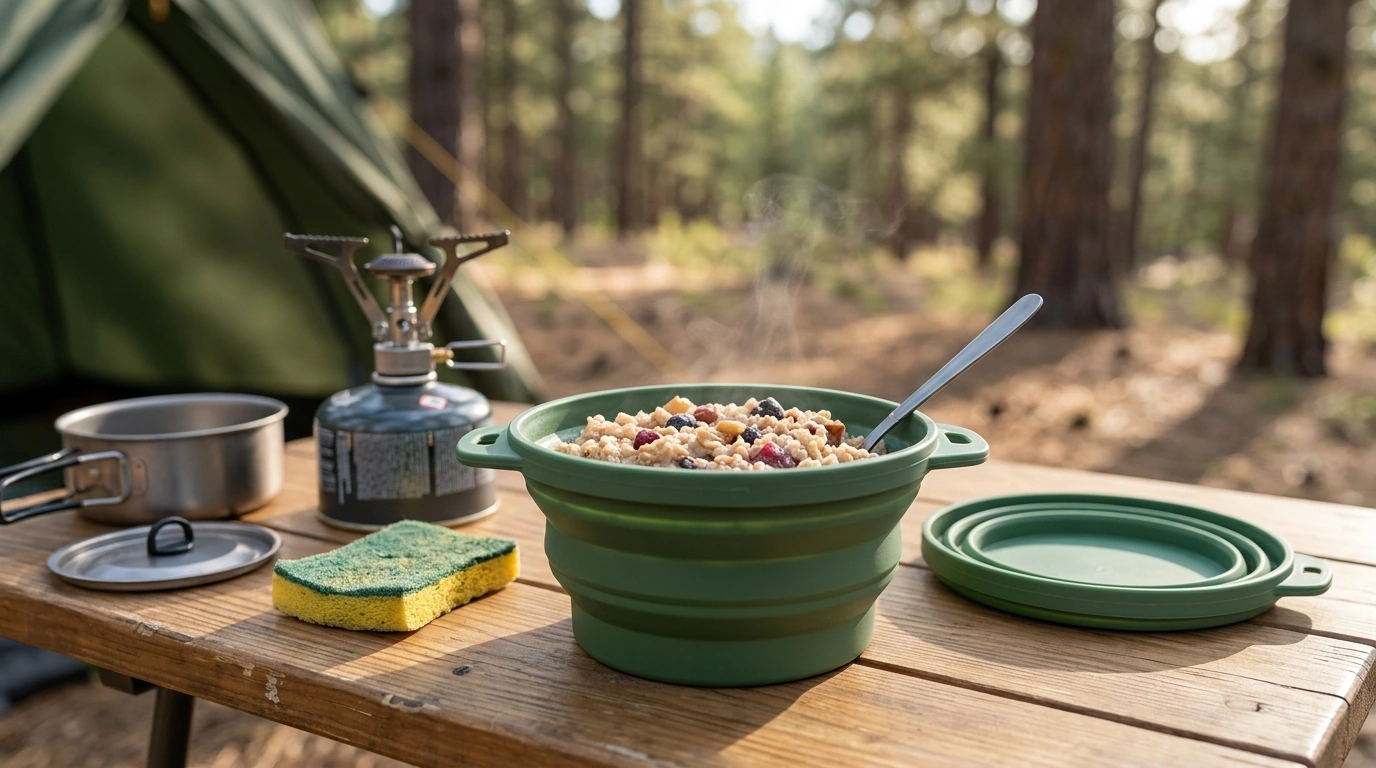
A collapsible bowl is one of the simplest ways to make camp meals and cleanup easier without adding bulk. When you’re trying to keep a cook kit tidy (or a daypack from turning into a noisy jumble), a flat-packing bowl can be the difference between “good enough” and genuinely convenient. Below is a practical guide to what to look for, how to use a collapsible bowl well outdoors, and where a silicone collapsible bowl fits in an ultralight or family camp kitchen.
Collapsible bowls solve a problem that rigid bowls can’t: they take up almost no space when you’re not using them. That makes them an easy add-on for hiking kits, travel bins, car-camping tubs, and even glove boxes.
Silicone is popular in camp cookware because it flexes repeatedly without cracking the way many rigid plastics can over time. That said, silicone quality and additives vary, so it’s smart to confirm a few details before relying on any bowl for daily trail meals.
Capacity matters more than many campers expect. Too small, and hot food sloshes over the rim when you stir. Too large, and you lose some of the space-saving advantage that made you choose collapsible gear in the first place.
| Typical use | What to look for | Notes |
|---|---|---|
| Snacks & sides | Low profile when collapsed; stable base | Great for minimalist kits and day hikes |
| Main meals | Enough volume for stirring; comfortable rim | Most versatile for solo or two-person trips |
| Prep & sharing | Wider opening; easy pour lip | Best for car camping or group cooking |
A collapsible bowl shines when you use it for more than one task. If it only comes out for dinner once a day, it’s still useful—but it becomes a “can’t-miss” item when it helps with breakfast, snacks, and cleanup too.
When washing dishes outdoors, follow local rules and distance guidelines so food scraps and graywater don’t impact waterways. Leave No Trace has a clear overview of responsible waste disposal practices: https://lnt.org/why/7-principles/dispose-of-waste-properly/.
Flat-packed gear is great until it tips over on a rock, picnic table edge, or tent vestibule. Stability comes down to base width, sidewall height, and how you set up your eating spot.
For more camp kitchen organization and cleanup ideas, REI’s camp kitchen basics are a solid reference: https://www.rei.com/learn/expert-advice/camp-kitchen.html.
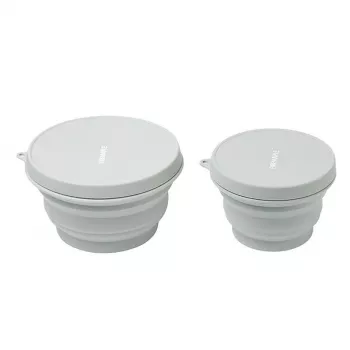
If space is tight and you want a simple, multipurpose bowl that can go from snacks to meals to a quick rinse station, the Collapsible Silicone Camping Bowl is an easy add to a hiking, travel, or car-camping setup.
It often can handle hot foods, but temperature limits vary by product. Follow the manufacturer’s guidance, avoid direct flame or contact with hot stove grates, and test with hot (not boiling) water first if you’re unsure.
Wash promptly, rinse thoroughly, and air-dry completely before packing. If smells linger, soak in warm water with a little baking soda, then rinse well and let it dry fully.
A separate bowl helps keep the pot cleaner for cooking, makes portioning simpler, and supports sharing a single pot among multiple people. Eating from the pot can be simpler for solo trips, but it usually increases cleanup and limits flexibility.





Leave a comment