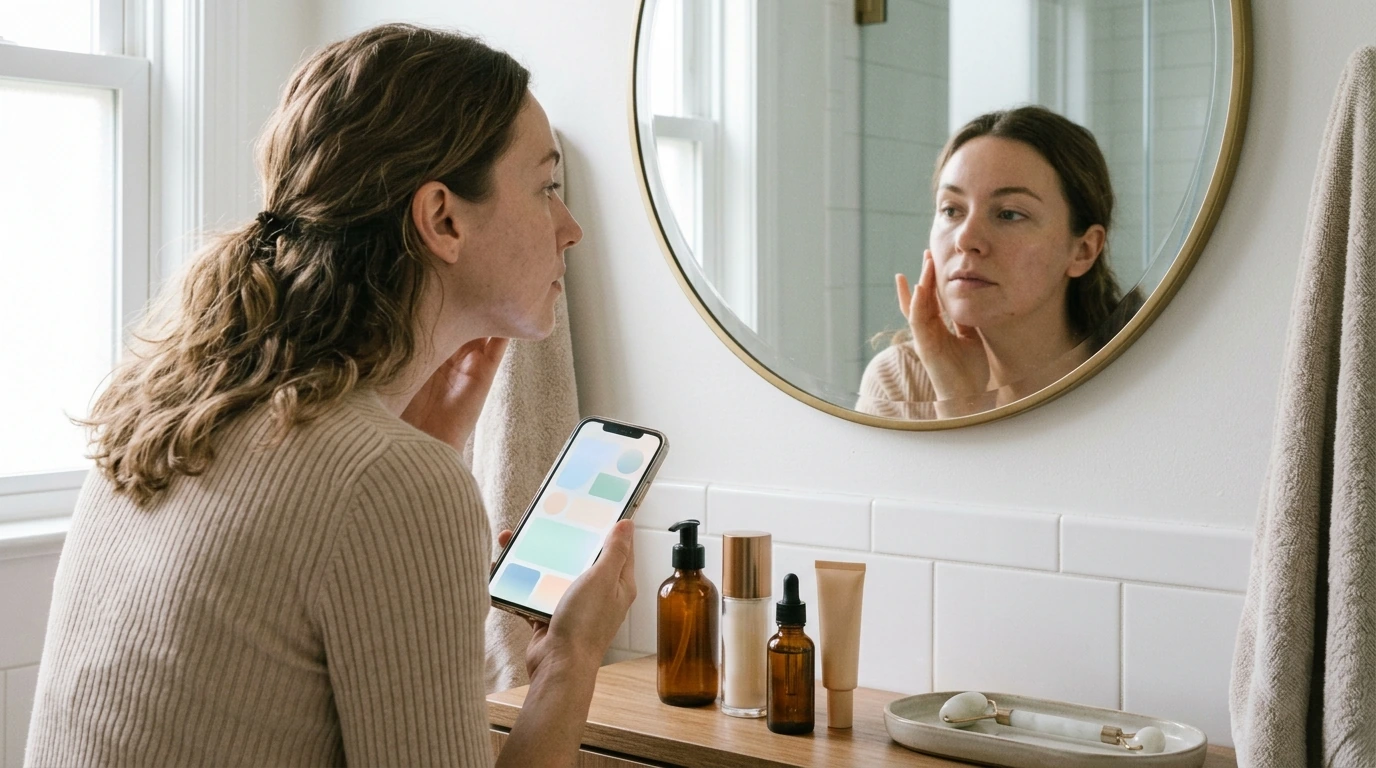
Personal skincare gets tricky fast: the same cleanser can feel perfect in July and suddenly strip your skin in January. AI helps by turning what you already know—skin type, concerns, climate, sensitivity triggers, product textures you tolerate—into a repeatable routine that adapts as your skin changes. The goal is not a complicated 12-step lineup; it’s a simple morning-and-night plan that stays consistent, spots problems early, and makes smart swaps when your skin (or your schedule) shifts.
Personalization is not “a totally unique product for every person.” It’s matching product categories and usage frequency to your skin’s current needs: hydration level, oil production, sensitivity, acne tendency, pigmentation, barrier health, and tolerance for actives.
AI personalization works best as a decision system. It helps choose a routine structure (cleanse → treat → moisturize → protect) and then adjusts intensities (daily vs. 2–3x/week), textures (gel vs. cream), and combinations (what not to layer). In other words, our team uses AI logic to keep your routine simple while still being responsive.
AI does not replace medical diagnosis. Persistent rashes, severe acne, or suspicious lesions belong with a dermatologist. AI can still help you simplify your routine while you wait for care and avoid making irritation worse with too many new products.
A good personalized routine is stable, not constantly changing. You want a baseline “always safe” set plus a controlled way to introduce upgrades—so you can tell what helped, what didn’t, and what needs to be paused.
AI recommendations get dramatically better when you provide the right details up front. Start with a clean profile: skin type (oily/dry/combination), sensitivity level, acne frequency, pigmentation concerns, and your top 1–2 goals (for example, fewer breakouts plus calmer redness).
Next, add context variables that matter more than most people expect: indoor heating/AC, humidity, sun exposure, mask use, shaving/waxing, workout frequency, and sleep quality. These details often explain why your skin “randomly” changes even when your products stay the same.
Track what your skin dislikes: stinging, tightness after cleansing, flaky patches, new closed comedones, or increased redness after a new active. Those reactions become rules your routine should respect.
| Input | Examples | What AI can decide from it |
|---|---|---|
| Skin type & barrier signals | Tightness, flaking, excess shine | Cleanser strength, moisturizer weight, how often to exfoliate |
| Sensitivity triggers | Fragrance, acids, retinoids, essential oils | Ingredient exclusions, slower ramp schedules, patch-test priority |
| Primary concern | Acne, dark spots, redness | Which active to prioritize (and which to delay) |
| Environment & lifestyle | Humidity, sun, workouts, shaving | Morning vs. night focus, SPF emphasis, gentler post-workout cleansing |
| Current routine results | Worse dryness, more bumps, no change | Remove likely irritants, simplify steps, adjust frequency before swapping everything |
Finally, set product constraints to avoid frustration: fragrance-free preference, budget range, cruelty-free/vegan, texture preferences (lightweight vs. rich), and time limits (a 3-step weekday routine is different from a 6-step weekend routine). If you’re using photos or scanning tools, keep expectations realistic—lighting and temporary irritation can distort results—so confirm changes by how your skin feels over 7–14 days.
For basic skin-care safety guidance, you can reference the American Academy of Dermatology Association (AAD) skin care basics. For sunscreen use and safety considerations, the U.S. Food & Drug Administration (FDA) sunscreen guidance is a reliable source.
When you’re dealing with reactivity, “routine notes” are often enough: “eczema-prone” and “sensitive to fragrance” are relevant without oversharing. And keep your own changelog outside any app (notes or spreadsheet): date started, frequency, and reactions. For background on allergy and sensitivity patterns, MedlinePlus has a helpful overview: MedlinePlus on allergies.
If you want a structured way to do this, our team recommends working from a guided plan that collects your inputs, builds a baseline routine, and schedules safe upgrades instead of adding everything at once. Start here: How AI Can Personalize Your Skincare Routine – AI Skincare Routine Suggestions Guide for Tailored Daily Skincare.
If you’re also building confidence with AI tools in general, you can pair it with Teach Yourself AI Fast | Beginner-Friendly Ebook for How to Teach Yourself AI Basics Fast so you can get clearer, more consistent routine outputs. And if you’re curious why recommendations improve over time, Rufus Knows You: How Your Past Purchases Teach AI to Recommend Smarter breaks down the practical “learning loop” behind smarter suggestions.
Accuracy depends on the quality of your inputs and whether you track reactions consistently. AI is best for routine structure and safe frequency planning, not diagnosis, so start conservative and reassess after 2–4 weeks.
Yes—AI works well when you set clear exclusion rules, keep a simplified baseline, patch test, and use slower ramp schedules for actives. Prioritize barrier comfort first, and if inflammation persists, seek dermatology care.
Cap your routine at the core four plus one targeted treatment, and introduce one change at a time. Prioritize sunscreen and barrier support, then use weekly check-ins to decide whether anything else is truly needed.





Leave a comment