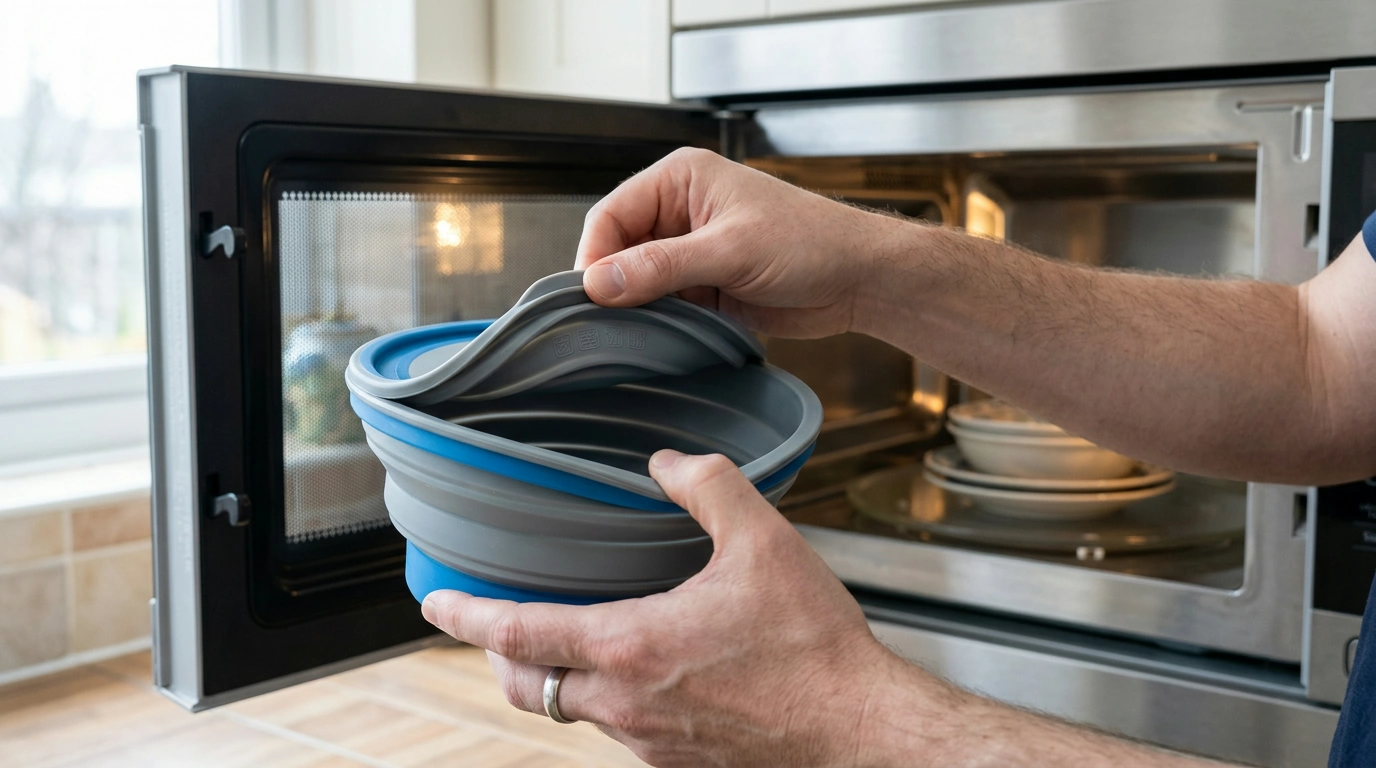
Some collapsible bowls are microwave safe, but the word “silicone” alone does not guarantee that the entire bowl can go in the microwave. A bowl may include a rigid plastic rim or base, a lid, a coating, or another part that is not microwave safe. Use it for heating only when the manufacturer labels the complete bowl as microwave safe and provides any temperature limits.
Look for a microwave-safe mark or care instructions on the bowl or its packaging. If you can’t confirm that every component is suitable, transfer the food to a microwave-safe dish instead. Remove the lid unless it is specifically rated for microwave use; if the instructions allow a cover, leave it vented so steam can escape.
Expand the bowl fully and place it on a stable microwave-safe plate. Heat food rather than an empty bowl, and use short intervals, stirring between them when practical. Food with a lot of oil or sugar can become especially hot, so follow the bowl’s stated temperature limits and avoid overheating.
After heating, handle the bowl carefully: both the food and the silicone may be hot. Use an oven mitt or let the bowl cool before carrying it. Stop using it if you notice cracking, warping, or other damage. Microwave-safe does not automatically mean oven-safe, so use only the heating methods listed in the product instructions.
It can be a convenient way to pack a bowl that takes up less space between meals. If you’re choosing one for your next trip, read our guide to collapsible silicone camping bowls for more on packing and everyday use.
Wash it with warm, soapy water, paying attention to the folds where food can collect. Put it in the dishwasher only if the care instructions say it is dishwasher safe, and let it dry fully before folding it away.




Leave a comment