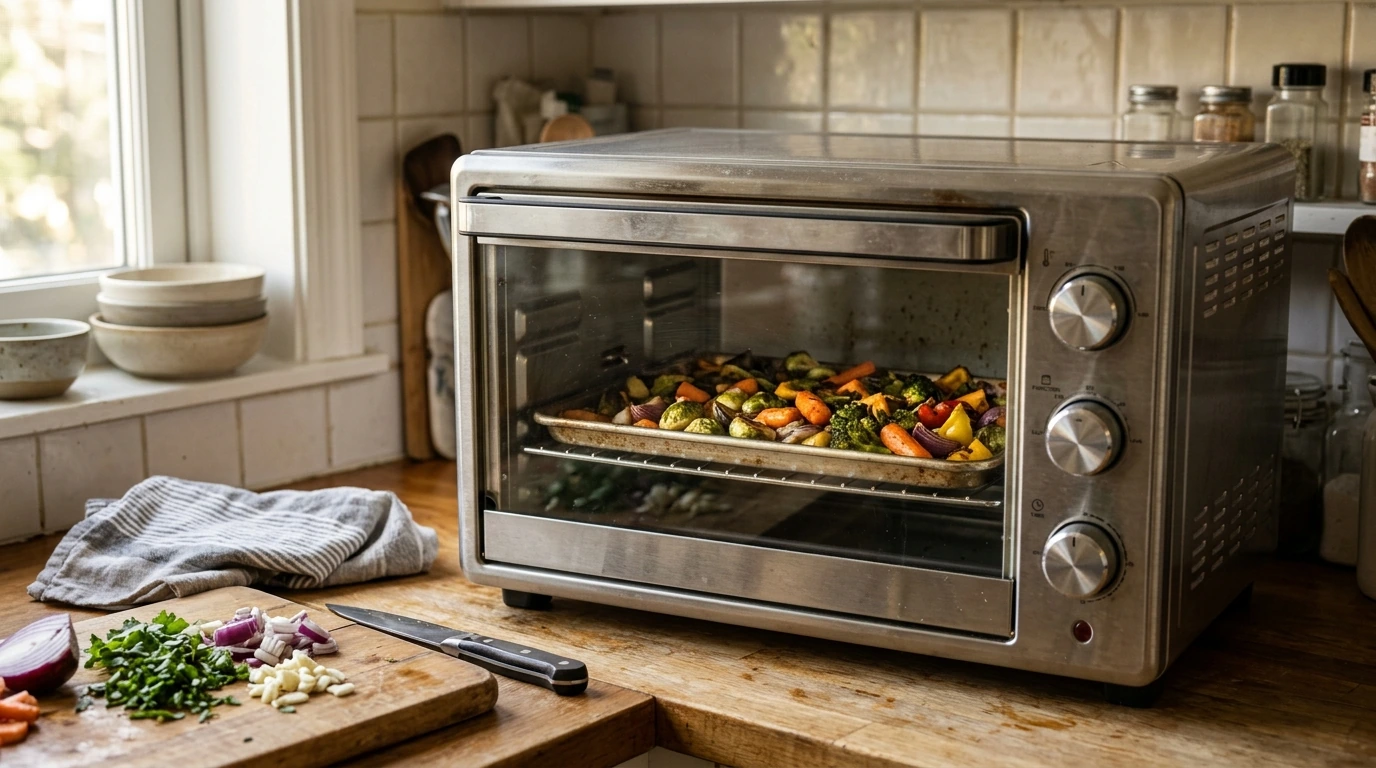
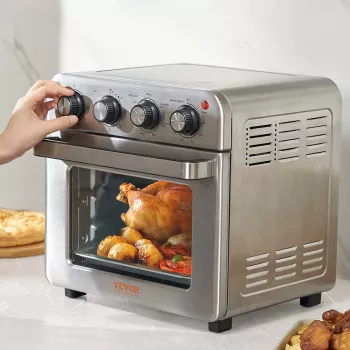
For fast weeknights, small kitchens, and anyone who wants crisp results without firing up a full-size oven, our 18L 1700W air fryer toaster oven brings air frying and convection cooking into one stainless steel countertop workhorse. It’s built for the everyday rhythm—toast in the morning, roasted vegetables at lunch, and a quick crisp-and-reheat dinner that tastes fresh again.
Most countertop cooking frustrations come from juggling too many tools—or using the wrong tool for the job. Our team picked this style of convection combo because it targets the problems you feel every day:
Think of 18L as “room to multitask.” You can toast and warm, roast a tray of vegetables, crisp frozen snacks, or reheat leftovers so they don’t go soggy. It’s especially handy when you want one countertop oven that can handle single servings and family sides—without needing a bulky full-size range.
The extra interior space also helps when cooking taller foods or arranging items with breathing room, which matters because airflow is a big part of what creates that crisp finish.
| What you’re making | Goal | Practical tip |
|---|---|---|
| Leftover pizza | Crisp the bottom, re-melt the top | Use a middle rack position and avoid overcrowding so air can circulate |
| Frozen fries or nuggets | Crunchy outside, hot center | Shake/turn partway through for more even browning |
| Vegetables (fresh or frozen) | Roasty edges without drying out | Toss with a little oil; spread in a single layer when possible |
| Toast or bagels | Even browning | Rotate if needed based on thickness and placement |
| Chicken pieces | Crisp skin-style finish | Pat dry first; check doneness with a thermometer |
A 7-in-1 design is about options: a single oven can handle different styles of cooking, from crisping to baking to reheating. When you’re deciding quickly, choose based on the finish you want:
Keeping one reliable countertop oven ready also simplifies meal timing when your stovetop is already busy—especially on weeknights when you’re trying to get multiple components to the table at once.
A 1700W countertop oven is designed to heat quickly and recover temperature faster after you open the door to flip, rotate, or check food. That’s useful for foods that benefit from strong heat early—like breaded items, roasted vegetables, and quick bakes.
One key habit: don’t overload the cooking area. Air circulation matters as much as wattage for crisp finishes, so give pieces space and cook in batches when you’re chasing maximum crunch.
Crisp outside doesn’t always guarantee “hot through.” When you’re cooking poultry, ground meats, or reheating leftovers, a food thermometer is the most reliable way to confirm doneness and safety. For safe minimum internal temperatures, use the USDA chart as your reference: USDA FSIS — Safe Minimum Internal Temperatures.
For reheating, aim for leftovers that are steaming hot and heated evenly—especially in the center. The USDA’s leftovers guidance is a helpful refresher for storage and reheat safety: USDA — Leftovers and Food Safety.
Both rely on circulating hot air, but an oven-style unit gives you a larger cavity with racks and trays, which makes it easier to toast, bake, roast, and reheat in more formats. Basket models can feel faster for very small batches, while an oven-style combo is more flexible for everyday meals.
It can handle multiple portions depending on the size of what you’re cooking and how you arrange it, especially if you leave space for airflow. For crisping, single-layer cooking (or cooking in batches) usually delivers better browning than stacking.
Use a food thermometer—browning can happen quickly, but temperature tells you what’s happening in the center. Follow safe internal temperature guidance for proteins and reheat leftovers until they’re steaming hot throughout.





Leave a comment